AEO vs GEO: What’s the Real Difference and Which One Actually Gets You Leads
Search is evolving faster than most businesses can keep up with. Not long ago, people typed questions into Google and clicked through to websites. Now, nearly 60% of searches end without a single click. Users get answers instantly, through AI overviews, featured snippets, knowledge panels, and AI-powered search platforms, without leaving the page.
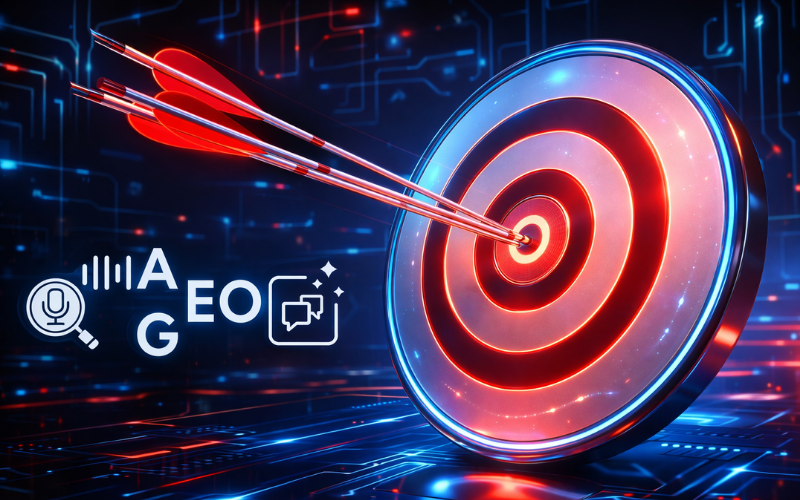
This new reality has given rise to two strategies that are shaping visibility in the AI era: AEO vs GEO. They might sound similar, but they operate differently, and the approach you take could make the difference between being noticed and being ignored.
Curious which one actually turns those searchers into leads? Keep reading, this is where the real story begins.
What’s Inside:
- What is Answer Engine Optimisation?
- What is GEO (Generative Engine Optimisation)?
- AEO vs GEO: What’s the Real Difference?
- Which Strategy Actually Drives Leads for Businesses?
- AEO vs GEO: Future-Proof Your Search Strategy with Us
What is Answer Engine Optimisation?
Answer Engine Optimisation (AEO) focuses on positioning your content as the direct answer when users ask questions online. Instead of simply ranking on a search results page, AEO aims to surface your content as the featured response displayed by search engines or voice assistants.
You’ve likely encountered AEO in action when using tools like Google Search, Siri, or Alexa. When a user asks a question such as “What is AEO? or “How does SEO work?”, the search engine often displays a concise answer box at the top of the results page.
This is where AEO comes into play. The goal is to structure content so that search engines recognise it as the most relevant and trustworthy answer to a user’s question.
Common AEO strategies include:
- Creating clear, question-based content
- Using structured data and schema markup
- Writing concise explanations that directly answer queries
- Optimising for featured snippet and voice search
What is Generative Engine Optimisation?
While AEO focuses on helping search engines extract answers from content, Generative Engine Optimisation (GEO) focuses on helping AI platforms reference and synthesise information when generating responses.
Generative Engine Optimisation (GEO) is a newer concept emerging from the rise of AI search platforms such as generative AI assistants and conversational assistants.
Instead of simply showing links, these platforms generate detailed responses by analysing and synthesising information from multiple sources across the web.
As a result, businesses must optimise their content for AI platforms that generate answers in real time, not just traditional search engines.
With GEO, the objective is to ensure that your brand, expertise, and content are referenced or incorporated within AI-generated responses. This requires a different approach compared to traditional SEO or AEO.
GEO strategies typically include:
- Content that demonstrates deep topical expertise
- Building strong topical authority in your industry
- Creating detailed, informative resources that AI models can reference
AEO vs GEO: What’s the Real Difference?

Although both strategies aim to improve digital visibility, they operate within different information ecosystems. Comparing how each approach works in practice highlights the key differences in how platforms interpret, surface, and prioritise content.
Purpose of Optimisation
AEO focuses on helping search engines extract a clear answer from your content when someone asks a question. GEO focuses on helping AI systems reference your brand when generating responses. In simple terms, AEO aims to surface your content as the answer, while GEO aims to influence how AI-generated answers are formed.
Content Placement in Search and AI Platforms
With AEO, your content can appear in featured snippets, voice search responses, or quick answer panels in Google. GEO focuses on platforms powered by large language models, where users receive a generated response instead of a list of links. In this environment, your information may influence the answer even if users never see your page directly.
Selection Process for Information
AEO relies on clear, structured content that directly answers a question. Search engines scan pages for concise explanations they can display quickly. GEO works differently because large language models analyse information from many sources and combine it into a summarised response.
Content Structure and Depth
AEO performs best when content is organised with strong headings, clear explanations, and direct responses to common queries. GEO relies more on depth and subject coverage. AI systems trained on large language models tend to reference sources that demonstrate consistent expertise across a topic.
Signals that Influence Trust
AEO relies heavily on on-page signals such as structured content, schema markup, and clear answers. GEO relies more on broader authority signals across the web, including brand mentions and trusted references that reinforce credibility and expertise.
Which Strategy Actually Drives Leads for Businesses?
When businesses evaluate AEO vs GEO, the real goal is simple: getting more enquiries from the visibility they gain.
AEO often produces quicker lead opportunities because it connects your content with users who are actively searching for a solution. When your answer appears in search at the right moment, it can guide potential customers directly to your business.
GEO strengthens your presence across AI-driven research journeys. As more people rely on AI platforms to explore options, businesses that appear consistently across trusted content are more likely to be recognised during that research process.
In practical terms, AEO tends to capture high-intent users ready to act, while GEO builds long-term visibility as AI platforms increasingly shape how people discover businesses.
To maximise leads in 2026 and beyond, relying on only one strategy limits your reach.
Using both AEO and GEO allows you to capture people who are ready to act while also increasing the chances of your brand being discovered through AI-powered research and recommendations.
Businesses that combine both strategies are far more likely to stay visible wherever decisions are being made, whether in traditional search results or AI-generated answers.
AEO vs GEO: Future-Proof Your Search Strategy with Us
The real question now isn’t AEO vs GEO, it’s whether your business is ready for a search landscape where answers appear before people even click. Brands that adapt early will be the ones shaping conversations, earning trust, and capturing demand before competitors even realise what changed. Turning visibility into real enquiries requires the right strategy and the right partner, which is why working with a forward-thinking digital marketing agency Melbourne businesses trust can make all the difference.
At Elephant in the Boardroom, we build next-gen SEO designed for the AI-first digital world, where search, answers, and generative platforms shape how customers find and trust brands. If you’re ready to position your business for what’s coming next rather than chasing yesterday’s tactics, our team is ready to help.
Reach out to Elephant in the Boardroom and let’s build a smarter search strategy together.

Pia - Content Blogging Specialist
Pia is a Content Blogging specialist at Elephant in the Boardroom, where she develops structured, search-led content designed to inform and convert. With 6+ years of experience in digital content and SEO writing, she brings expertise in long-form blogging, topic authority, and audience-first storytelling. Pia contributes insights on content strategy, editorial best practice, and organic growth, drawing on experience supporting brands operating at scale.